
When a story made the world run faster
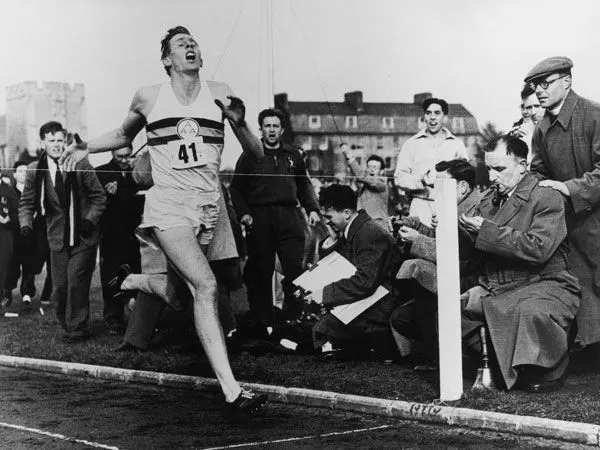
The four‑minute mile was more than a sporting challenge; it was a story every person believed. For years, coaches, commentators and athletes spoke about the human body’s supposed limit and repeated it so often that the number became fixed in people’s minds - not just as a record to beat, but as a boundary that couldn’t be crossed.
Stories like that shape performance. When people believe something is impossible, they behave accordingly. They hold something back, training only to the edge of the accepted limit and rarely beyond it. The story becomes part of the system.
Roger Bannister changed that story in 1954 when he ran a mile in three minutes fifty‑nine point four seconds. He didn’t just break a time barrier; he broke the narrative around that barrier and showed that the limit people had accepted wasn’t as fixed as they thought. His story went all around the world. Then, two weeks later, John Landy also ran it under 4 minutes. Over the years that followed, dozens of other elite runners achieved what had once seemed impossible.
That’s the power of storytelling. A new story changes what people believe is possible, and when belief changes, behaviour changes with it. People train differently. They compete differently. They aim higher because the frame around performance has shifted.
The same is true in business. Teams carry stories about what they can and cannot do - what customers they can win, what level of growth is realistic, what kind of company they’re allowed to become. Some of those stories are useful. Many are not. The right story gives people permission to move differently. It creates direction, confidence and momentum. It turns ambition from a vague hope into something people can see, understand and act on. Bannister’s run didn’t just prove that one man could run faster. It gave everyone else a better story about what was possible.

by Joe Cox
Follow on LinkedIn